

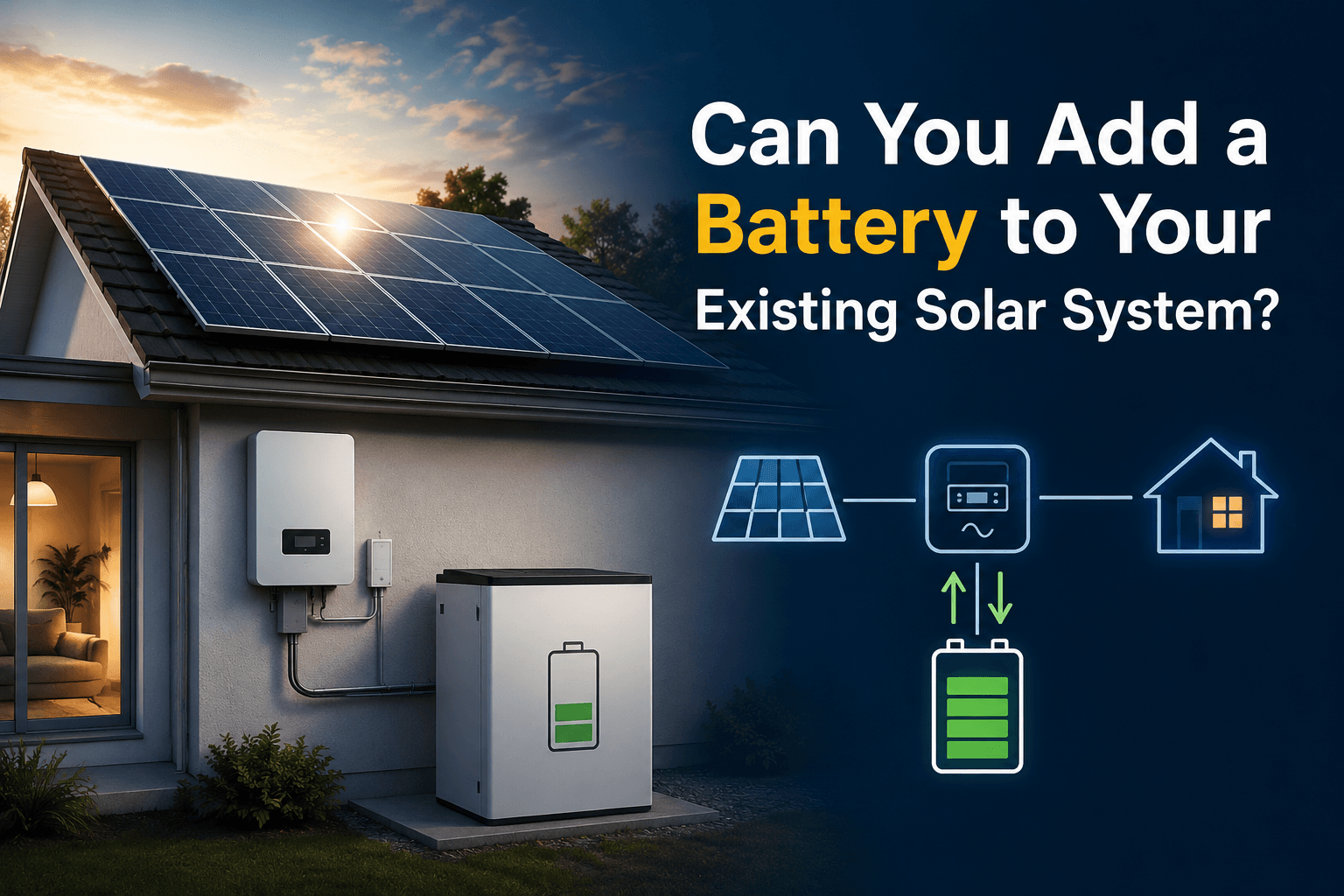
Yes, in most cases you can add a battery to an existing solar system without replacing your panels. The real question is how. There are two main paths: an AC-coupled battery that works alongside your current inverter, or a changeover to a hybrid inverter with a battery connected to it. Which one makes sense depends on the age and health of your inverter, how much excess solar you generate, and whether your switchboard needs work — and with the federal battery discount introduced in 2025 still available as of 2026, retrofits now stack up for many Melbourne homes that ruled them out a few years ago.
The short answer
- Almost any grid-connected solar system can take a battery — your panels stay exactly where they are.
- AC-coupled batteries are the standard retrofit path — they work alongside your existing inverter without touching it.
- A hybrid inverter changeover makes sense when your inverter is ageing, undersized or out of warranty anyway.
- A battery only saves money if there is spare solar to fill it — your export data should drive the sizing, and the federal discount of around 30 per cent improves the numbers.
Read more: Victorian Solar Rebate: What Changed on 1 July 2026
How Does a Battery Connect to an Existing Solar System?
AC-Coupled Batteries
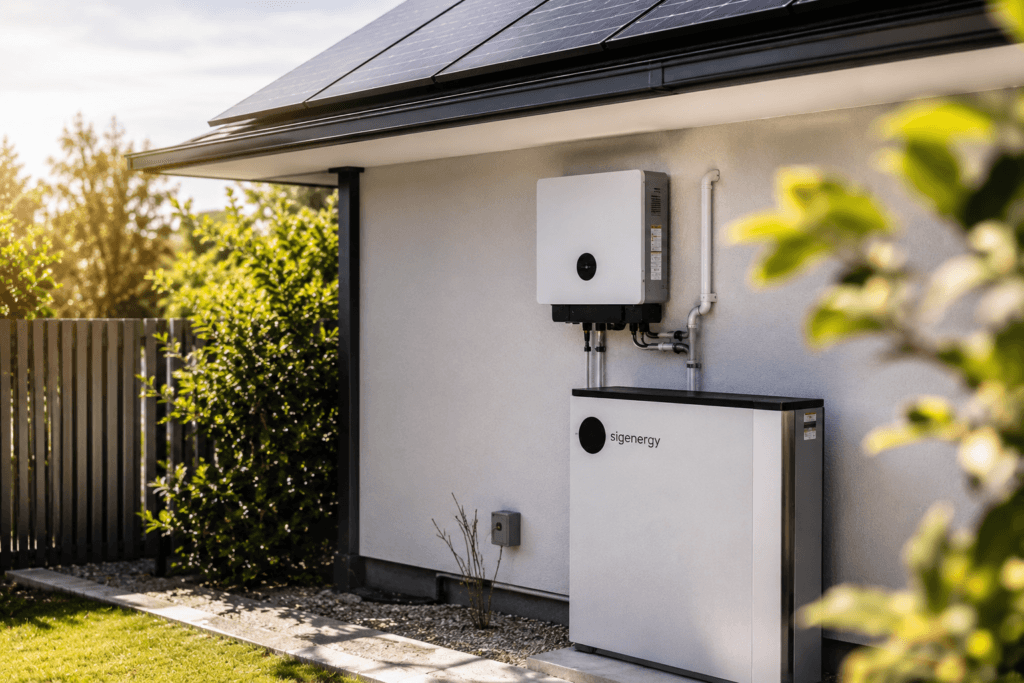
An AC-coupled battery has its own built-in inverter. It connects at the switchboard and charges from the excess solar your system sends out, without touching your panels or your existing inverter. This is the standard retrofit path because it works with almost any solar system already on the roof.
Hybrid Inverter Changeovers
The alternative is to replace your existing solar inverter with a hybrid model that manages both the panels and a battery. This involves more installation work, but it consolidates everything into one system and can be slightly more efficient, since the battery charges directly from the panels.
| Factor | AC-coupled battery | Hybrid inverter changeover |
|---|---|---|
| Existing inverter | Stays in place | Replaced |
| Installation work | Lower | Higher |
| Round-trip efficiency | Slightly lower | Slightly higher |
| Makes sense when | Inverter is newer and reliable | Inverter is ageing or undersized |
When an AC-Coupled Battery Is the Better Choice
If your solar system is only a few years old and performing well, an AC-coupled battery is usually the practical answer. You keep the equipment that is already working, the installation is simpler, and the battery operates independently, so a fault in one system does not take out the other. It is also the path that disturbs your existing warranties the least.
When Replacing Your Inverter Makes More Sense
If your inverter is approaching the end of its service life, has an expired warranty, or is undersized for your panels, folding its replacement into a battery installation often costs less than doing the two jobs separately. It is also the better route if you are planning to expand the solar array at the same time, because the whole system gets designed together.
Is Your Solar System Big Enough to Charge a Battery?
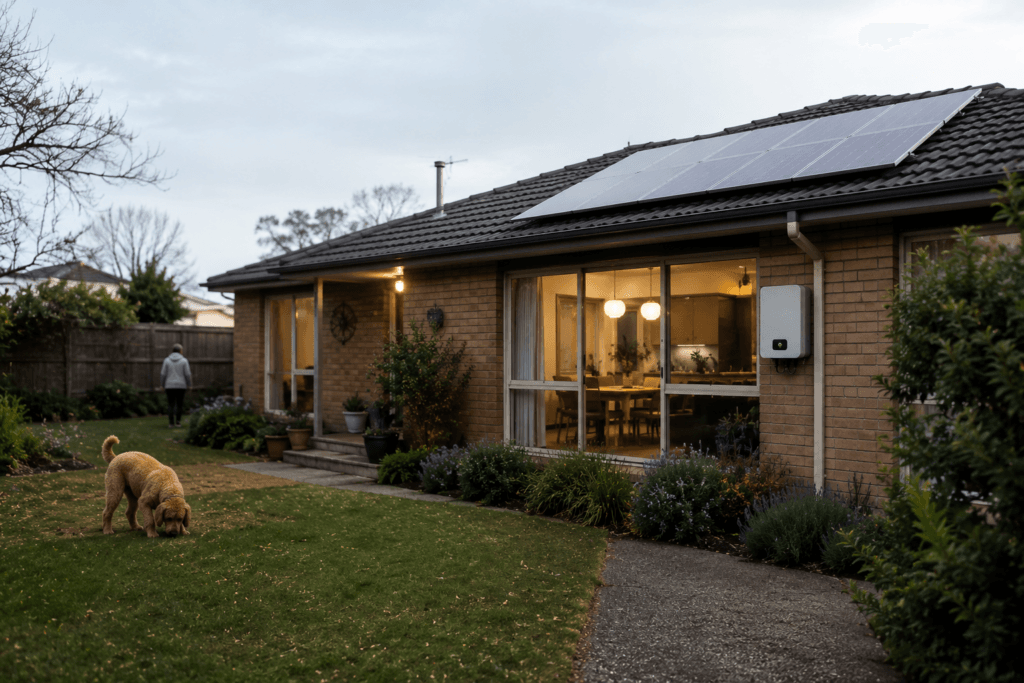
A battery only saves money if there is spare solar to fill it. Your electricity bill shows how much you export: if you are regularly sending a meaningful amount to the grid, that energy can go into a battery instead. With feed-in tariffs now so low, storing that surplus for the evening instead of exporting it is a big part of why solar still pays off in 2026.
Smaller systems around 3 to 5 kilowatts can struggle to fill a full-sized battery in a Melbourne winter, so in some cases the right answer is a smaller battery, or panels and battery upgraded together. Sizing against your actual export data beats guessing.
What About the Federal Battery Discount?
The federal government’s Cheaper Home Batteries program, introduced in July 2025, provides an upfront discount of around 30 per cent on the battery portion of an installation as of 2026. It is delivered through the small-scale certificate system (STCs), and applies to approved batteries installed by accredited installers.
~30%
Upfront discount on the battery portion of an installation
STCs
Small-scale certificates deliver the discount at quote stage
1 day
Typical install time for a straightforward AC-coupled retrofit
Eligibility rules and product lists apply, so confirm the details with your installer or the program’s official guidance before signing a quote.
Do You Need Switchboard or Wiring Work?
Sometimes. Older switchboards may need upgrading to take a battery circuit, and if you want backup power during outages, the circuits you want protected have to be identified and wired accordingly.
All of this is licensed electrical work. It is worth having the switchboard assessed at quote stage so there are no surprises on installation day.
So Should You Add a Battery to Your System?
If your inverter is healthy, your bills show consistent solar exports and you use meaningful power in the evenings, an AC-coupled retrofit is usually a straightforward win, especially with the federal discount available.
If your inverter is old or undersized, price a hybrid changeover instead, since you were heading for an inverter replacement anyway. If your system barely covers your daytime use, fix the solar side first, because a battery cannot store energy you do not generate.
Get your battery retrofit quoted
Axial Electric is a Melbourne energy business based at 39 May Gibbs Cres, Lynbrook VIC 3975, operating under a Victorian Electrical Licence with more than 15 years of experience in solar, battery storage and home electrification. Our team can review your inverter, export data and switchboard, and quote the retrofit path that actually fits your system.
Frequently Asked Questions
Can any solar system have a battery added?
Almost all grid-connected systems can take an AC-coupled battery, because it works independently of the existing inverter. The practical limits are spare solar generation and switchboard capacity rather than compatibility.
Do I need to replace my solar panels to add a battery?
No, not in most cases. Panels are unaffected by a battery retrofit. The only equipment sometimes replaced is the inverter, and only when it is old, undersized or being upgraded by choice.
Can I claim the federal battery discount on a retrofit?
Yes. As of 2026 the Cheaper Home Batteries program applies to approved batteries added to existing solar systems, provided the installation is done by an accredited installer. Eligibility criteria and approved product lists apply.
Will a battery keep my power on in a blackout?
Only if the system is configured for backup, with the circuits you want protected wired to the battery. Not every installation includes this by default, so raise it at quote stage if backup matters to you.
How long does a battery retrofit take to install?
A straightforward AC-coupled installation is typically completed within a day. Jobs involving a hybrid inverter changeover or switchboard upgrade can take longer, and your installer will confirm this when quoting.